



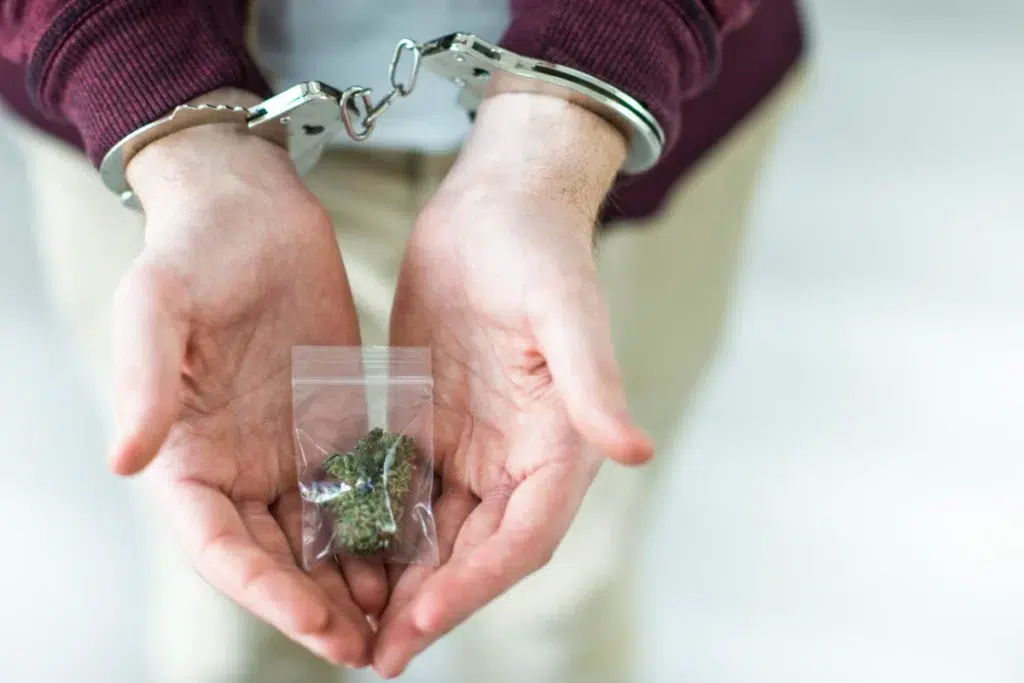
Marijuana laws in Indiana are strict, and small details can make a big difference. The amount involved, how it is packaged, and whether there is any sign of intent to deal can all affect whether a charge stays a misdemeanor or rises to a felony. A mistake or misunderstanding can carry consequences that follow you for years.
At Gemma & Karimi Law, we defend clients across Indianapolis and Marion County against drug charges with a focus on clear strategy and strong courtroom advocacy. In this article, we explain how Indiana law treats marijuana possession, what amounts may trigger felony charges, and the penalties that may apply.
If you are facing a marijuana allegation, early legal guidance can protect your rights and your record.
What Quantity Triggers Felony Possession in Indiana?
Across many states, low-quantity marijuana possession under 1 ounce, roughly 28 grams of marijuana, often begins as a misdemeanor offense. Larger amounts, typically between 1 and 8 ounces or more, may suggest intent to distribute and can trigger felony marijuana charges. Indiana marijuana laws are stricter than those in states that allow recreational marijuana or broader medical marijuana use.
Under Indiana Code 35-48-4-11, simple possession of marijuana under 30 grams is generally charged as a misdemeanor. However, if a person possesses 30 grams or more and has a prior conviction for a drug offense, prosecutors may elevate the case to a Level 6 felony possession. Dealing charges under Indiana Code 35-48-4-10 escalate even more quickly once the weight exceeds 30 grams or when additional evidence suggests intent to sell.
Marijuana is classified as a controlled substance under Indiana law, and concentrated possession can carry serious consequences. Products such as hash oil, vape cartridges, wax, and infused edibles are typically measured by total product weight, not just THC content. That means a pan of brownies or a jar of concentrate can result in felony charges based on overall weight, even if the usable marijuana amount appears small.
Personal use amounts often involve only a few grams and minimal marijuana paraphernalia, such as a single pipe. But when officers find multiple baggies, vacuum-sealed packaging, or bulk quantities, the prosecution may argue the case goes beyond simple possession. Weight is important, but packaging, statements, and surrounding circumstances heavily influence how criminal charges are filed.
Police reports frequently highlight additional evidence that may support a felony marijuana charge, even if the amount of marijuana alone seems borderline:
- Multiple baggies or heat-sealed pouches
- Digital scales with residue
- Large amounts of cash in small bills
- Text messages about pricing or meetups
- Ledger sheets or pay-owe notes
Quantity starts the analysis, but context often determines whether someone faces misdemeanor possession or felony marijuana charges. Next, we will examine the possible penalties and long-term consequences under Indiana criminal law.
Felony Marijuana Charges: Penalties and Long-Term Consequences in Indiana
Under Indiana criminal law, felony marijuana charges carry fixed sentencing ranges. A Level 6 felony carries a sentencing range of 6 months to 2.5 years, along with a possible fine of up to $10,000. While a judge may suspend part of the sentence or order probation, jail time remains a real possibility depending on the facts of the case, prior convictions, and the defendant’s record.
A felony conviction can also affect important civil rights. In Indiana, a person convicted of a felony temporarily loses voting rights while incarcerated, though those rights are restored upon release. Firearm restrictions are more severe, as federal law prohibits firearm possession by anyone with a felony conviction involving a controlled substance.
Beyond the courtroom, felony drug convictions often appear on background checks for years. Employers, landlords, and licensing boards frequently review marijuana convictions and other drug offenses when making decisions. This can make it harder to secure employment, housing, or professional credentials. Some individuals also face denials for government clearances or other regulated positions.
Driver’s license consequences are not automatic in every marijuana offense, but suspensions may apply in cases involving a motor vehicle or as part of a court-ordered sentence. Professional licensing boards, including those overseeing nurses, teachers, and CDL holders, may open independent reviews after a felony marijuana conviction. Even when jail is avoided, the long-term penalties can extend well beyond the criminal case itself.
The table below summarizes common offense levels and possible penalties under current Indiana law. Every particular case depends on specific facts, prior convictions, and how prosecutors file the charges.
| Offense or Condition | Charge Level | Possible Jail or Prison | Possible Fine | Statute Reference |
| Possession under 30 grams, no prior drug conviction | Class B misdemeanor | Up to 180 days | Up to $1,000 | IC 35-48-4-11 |
| Possession under 30 grams, with prior drug conviction | Class A misdemeanor | Up to 1 year | Up to $5,000 | IC 35-48-4-11 |
| Possession of 30 grams or more with a prior drug conviction | Level 6 felony | 6 months to 2.5 years | Up to $10,000 | IC 35-48-4-11 |
| Dealing 30 grams to under 10 pounds | Level 6 felony | 6 months to 2.5 years | Up to $10,000 | IC 35-48-4-10 |
| Dealing 10 pounds or more | Level 5 felony | 1 to 6 years | Up to $10,000 | IC 35-48-4-10 |
The possible penalties for a felony marijuana charge go far beyond jail time and fines. A conviction can affect employment, housing, licensing, and firearm rights for years. That is why early strategy and strong criminal defense representation can significantly influence the outcome of a marijuana case.
Facing Felony Marijuana Charges: Immediate Steps to Take
Silence is your friend. Do not give statements or consent to a search without a lawyer present, even if the officer sounds friendly. Simple replies can get twisted later.
Contact a criminal defense attorney as soon as you learn about an arrest or investigation. Early calls help us protect your rights in interviews, at first hearings, and in bond reviews. Delay can close doors that stay open on day one.
Save proof that shows lawful possession or clarifies weight. Keep receipts, packaging, pharmacy cards, medical records from other states, or digital logs that show purchase dates. Screenshots can help too.
Write down the details of the stop or search while they are fresh. Time, location, which officer said what, and where items were found can all matter. Small facts often win big motions.
The right moves in the first 48 hours set the stage. Next up are the legal ideas that shape how prosecutors build a felony case.
Legal Concepts That Can Determine Felony Exposure in Indiana
Actual possession means the marijuana is on your person or in your hand. Think pocket, waistband, backpack you are wearing, or a joint you are holding. Physical control is the point.
Constructive possession looks at access and intent to control. Weed in a shared car or apartment can still bring charges if the state links you to the stash through statements, fingerprints, or other ties. These cases are often the ones we take to a hearing.
The state must prove every element beyond a reasonable doubt. We hold them to that burden of weight, knowledge, and intent. Gaps and contradictions matter.
Intent is often read from the scene. Scales, multiple baggies, and texts can push a case from simple possession into dealing. We work to separate personal use from sales claims wherever the facts allow.
Now that we’ve covered the building blocks, let’s compare how a misdemeanor stacks up against a felony on records and in sentencing.
How Felony Versus Misdemeanor Marijuana Charges Are Determined
Jurisdictions use a mix of weight, packaging, and prior record to set the charge level. Small quantities for personal use are often treated as misdemeanors. Larger amounts or sales clues can turn the case into a felony.
Felony records bring harsher jail or prison terms, higher fines, and tighter probation terms. Misdemeanors are still serious, yet the long-term damage to jobs, housing, and civil rights is usually lower. Keeping a case in misdemeanor territory is a big deal for your future.
Prior drug convictions can raise the stakes fast under Indiana Code 35-48-4-11. A prior can convert under-30-gram possession to a Class A misdemeanor, and 30 grams or more to a Level 6 felony. This is where charge classification shapes strategy from the start.
Early case mapping helps us identify suppression issues, identify treatment options, and explore possible charge reductions. That planning often starts with Indiana’s local marijuana rules.
Indiana-Specific Rules That Affect Marijuana Felony Charges
Recreational marijuana remains illegal in Indiana. Unlike nearby states, there is no legal retail market and no personal-use exception for visitors. Transporting products from a legal state into Indiana can still lead to charges here.
Indiana Code 35-48-4-11 covers possession of marijuana and related extracts. Dealing is charged under Indiana Code 35-48-4-10. Felony exposure increases with weight, prior convictions, and facts suggesting sales or delivery.
In Marion County, prosecutors use discretion based on facts and records. First-time simple possession may result in diversion or a reduced plea, but that is not guaranteed. Felony-level cases with sales clues tend to move more aggressively. In 2019, the Marion County Prosecutor announced that possession of one ounce or less of marijuana under their administration would no longer be criminally prosecuted. However, that only applies to Marion County, Indiana. Additionally, the Marion County Prosecutor continues to charge Marijuana possession of less than one ounce in certain circumstances. It is at their discretion whether to file charges or not in any given case.
Indiana’s expungement law, Indiana Code 35-38-9, can seal many records after a waiting period if you meet the conditions. Misdemeanors often have a 5-year wait, and many felonies carry an 8-year wait. Filing rules are strict, so timing and clean paperwork matter.
With the rules set, the next step is to build a defense that fits the facts on the ground.
Strategies For Responding To Felony Marijuana Possession Allegations
We often challenge the stop and the search first. If police lacked a valid reason to pull the car or search the home, the court can suppress the marijuana. No evidence, no case.
Weight calculations and constructive possession get close attention. Scales must be accurate, moisture content can shift weight, and mixed occupants complicate control. We press those gaps in hearings.
Some clients qualify for diversion or problem-solving courts. These programs focus on treatment and accountability, which can lead to dismissals or reduced charges after successful completion. A clean finish beats a conviction every time.
Plea talks can aim to downgrade a Level 6 felony to a misdemeanor when the facts support it. We highlight treatment steps, steady work, and family support to humanize your file. One step down in charge level can unlock better housing and job options later.
If you are staring at a marijuana charge in Indianapolis, we are ready to step in and protect what matters most.
Facing Marijuana Charges in Indianapolis? Contact Us for a Strong Defense
Gemma & Karimi Law brings more than 25 years of criminal defense experience to clients across Indianapolis, and we keep communication at the center of each case. We fight drug charges, OWI, violent felonies, and sex offense allegations with the same steady approach, case after case. If you want clear answers and a plan, reach out and let’s talk about next steps.
Feel free to call (317) 676-1368 for a confidential consultation, or use our Contact Us page. We welcome your questions and move fast to protect your rights. We focus on building practical defenses that hold up in real Indiana courtrooms.